

National Memory
A Product's Dialogue with an Era
The Brand Story of Changchun People's Pharmaceutical Group on its 60th Anniversary
A Product's Dialogue with an Era
The Brand Story of Changchun People's Pharmaceutical Group on its 60th Anniversary
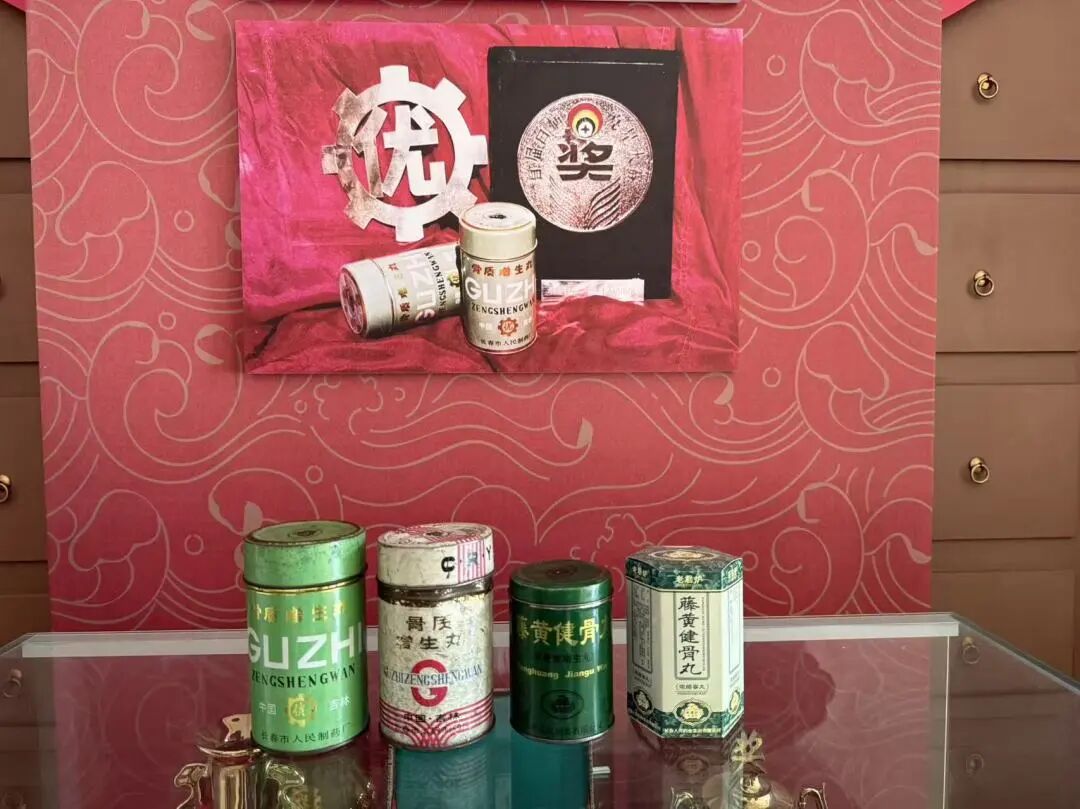
The 60th Anniversary Brand Story of Changchun People's Pharmaceutical Group
A medicine, exclusively produced by Changchun People's Pharmaceutical Factory since 1973, has been around for over half a century.
Its name has changed once, and its packaging has been updated generation after generation, but the formula of seven medicinal herbs has never changed.
It is Tenghuang Jian Gu Wan (formerly Bone Hyperplasia Pill).
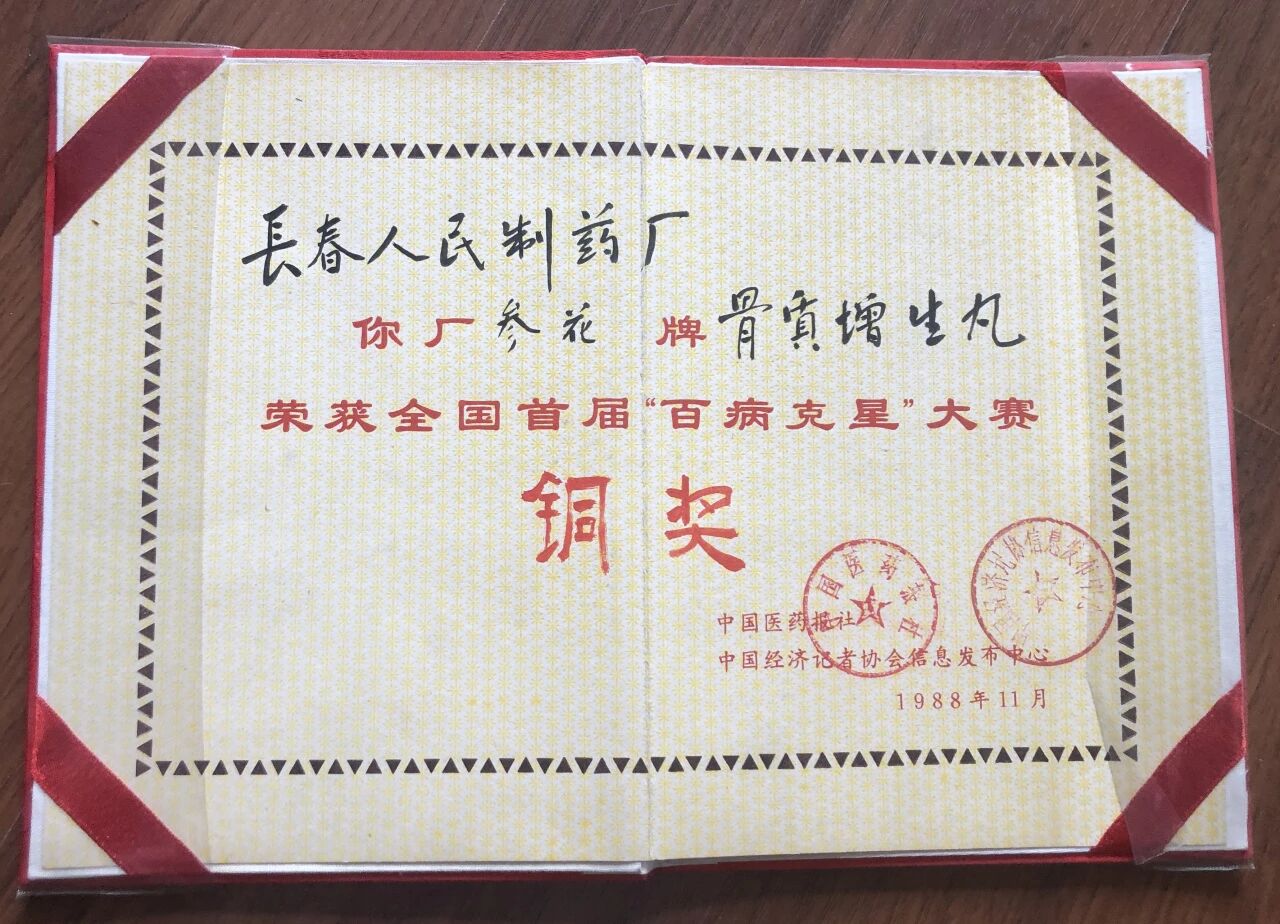
In the archives of People's Pharmaceutical Factory, yellowed inspection records, approval documents stamped with red seals, and faded medals record the journey of this medicine from nothing to something, from local standards to national standards. More importantly, it appears in the memories of generations of bone disease patients—those troubled by back pain, leg pain, and joint pain, who, with its help, have straightened their backs again.
Over fifty years, a single pill, a national memory spanning half a century.
Its name has changed once, and its packaging has been updated generation after generation, but the formula of seven medicinal herbs has never changed.
It is Tenghuang Jian Gu Wan (formerly Bone Hyperplasia Pill).
In the archives of People's Pharmaceutical Factory, yellowed inspection records, approval documents stamped with red seals, and faded medals record the journey of this medicine from nothing to something, from local standards to national standards. More importantly, it appears in the memories of generations of bone disease patients—those troubled by back pain, leg pain, and joint pain, who, with its help, have straightened their backs again.
Over fifty years, a single pill, a national memory spanning half a century.
Dedicated to research and development, creating effective solutions
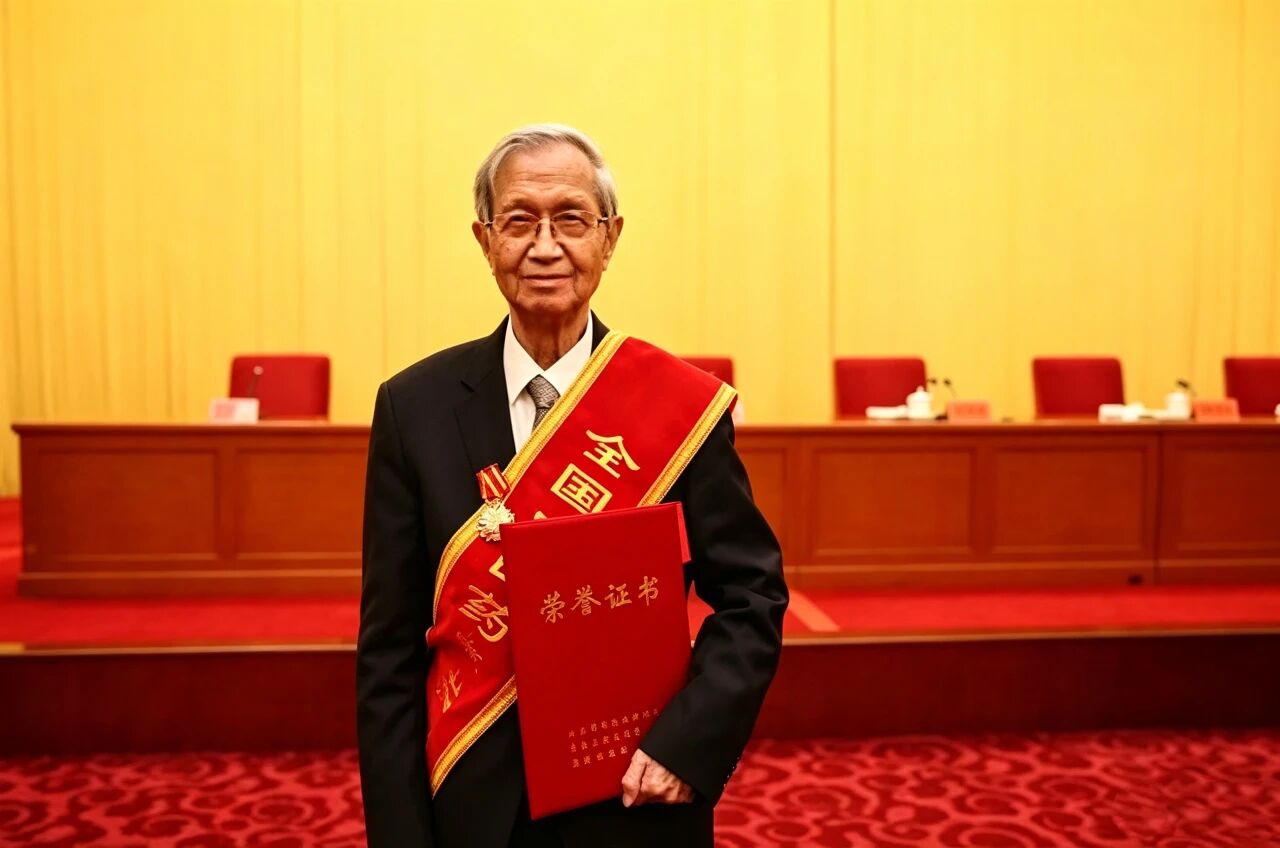
In 1972, the prescription for "Bone Hyperplasia Pill," developed by Professor Liu Bailing of the Affiliated Hospital of Changchun College of Traditional Chinese Medicine (now Changchun University of Traditional Chinese Medicine), was transferred to Changchun People's Pharmaceutical Factory.
Based on the traditional Chinese medicine theory that "the kidney governs the bones," Professor Liu Bailing determined the formula to consist of seven herbs: Rehmannia glutinosa (processed), Pyrola rotundifolia, Drynaria fortunei (processed), Cistanche deserticola, Epimedium brevicornu, Spatholobus suberectus, and Raphanus sativus (fried). He began research and development in 1965, and after more than ten years of clinical trials, the formula was finalized.
In 1973, Changchun People's Pharmaceutical Factory officially took over and began exclusive mass production, transforming this prescription into a mass-producible, quality-controlled medicine. From that moment on, this medicine left the clinic and reached patients across the country.
Based on the traditional Chinese medicine theory that "the kidney governs the bones," Professor Liu Bailing determined the formula to consist of seven herbs: Rehmannia glutinosa (processed), Pyrola rotundifolia, Drynaria fortunei (processed), Cistanche deserticola, Epimedium brevicornu, Spatholobus suberectus, and Raphanus sativus (fried). He began research and development in 1965, and after more than ten years of clinical trials, the formula was finalized.
In 1973, Changchun People's Pharmaceutical Factory officially took over and began exclusive mass production, transforming this prescription into a mass-producible, quality-controlled medicine. From that moment on, this medicine left the clinic and reached patients across the country.
From Prescription by Renowned Doctors to Finished Medicine: The Refinement of Meticulous Craftsmanship
Once a prescription reaches the pharmaceutical factory, it still has a long way to go. Countless processes separate a single prescription from a finished product that can be produced stably and with controlled quality.
How to process the medicinal materials, the fineness of the powder, how to control the decoction time and temperature, how to determine the ratio of honey to powder—each step requires repeated verification in practice.
Back then, the pharmaceutical factory was still located in its old factory area at the southern end of Minfeng Street. Without automated equipment, workers relied on manual labor, visual observation, and experience to judge the ingredients. Yet, even under those conditions, the first batch of bone hyperplasia pills was produced.
From the very first batch, the factory established a complete quality inspection system. The number of bacteria, mold, weight variation, moisture content, and pathogens in each batch were meticulously recorded, leaving nothing out. These yellowed inspection records are still well-preserved in the archives today. Beyond the prescription, the selection of raw materials adheres to strict geographical standards from the outset—Rehmannia glutinosa is sourced from Jiaozuo, Henan; Pyrola rotundifolia is exclusively from Inner Mongolia; Cistanche deserticola comes from Xinjiang; Drynaria fortunei is sourced exclusively from Hubei; Epimedium is strictly from Gansu; Spatholobus suberectus is from Yunnan; and Raphanus sativus seeds are primarily from Gansu. Each herb has a clearly defined origin.
From selection, cleaning, cutting, and processing, to sterilization, pulverization, extraction, and concentration, and then to pill making, drying, sieving, and compounding… a total of 18 processes, each with strict operational procedures. From raw materials to finished product, every step has standards, and every step is overseen by designated personnel.
Once a prescription reaches the pharmaceutical factory, it still has a long way to go. Countless processes separate a single prescription from a finished product that can be produced stably and with controlled quality.
How to process the medicinal materials, the fineness of the powder, how to control the decoction time and temperature, how to determine the ratio of honey to powder—each step requires repeated verification in practice.
Back then, the pharmaceutical factory was still located in its old factory area at the southern end of Minfeng Street. Without automated equipment, workers relied on manual labor, visual observation, and experience to judge the ingredients. Yet, even under those conditions, the first batch of bone hyperplasia pills was produced.
From the very first batch, the factory established a complete quality inspection system. The number of bacteria, mold, weight variation, moisture content, and pathogens in each batch were meticulously recorded, leaving nothing out. These yellowed inspection records are still well-preserved in the archives today. Beyond the prescription, the selection of raw materials adheres to strict geographical standards from the outset—Rehmannia glutinosa is sourced from Jiaozuo, Henan; Pyrola rotundifolia is exclusively from Inner Mongolia; Cistanche deserticola comes from Xinjiang; Drynaria fortunei is sourced exclusively from Hubei; Epimedium is strictly from Gansu; Spatholobus suberectus is from Yunnan; and Raphanus sativus seeds are primarily from Gansu. Each herb has a clearly defined origin.
From selection, cleaning, cutting, and processing, to sterilization, pulverization, extraction, and concentration, and then to pill making, drying, sieving, and compounding… a total of 18 processes, each with strict operational procedures. From raw materials to finished product, every step has standards, and every step is overseen by designated personnel.
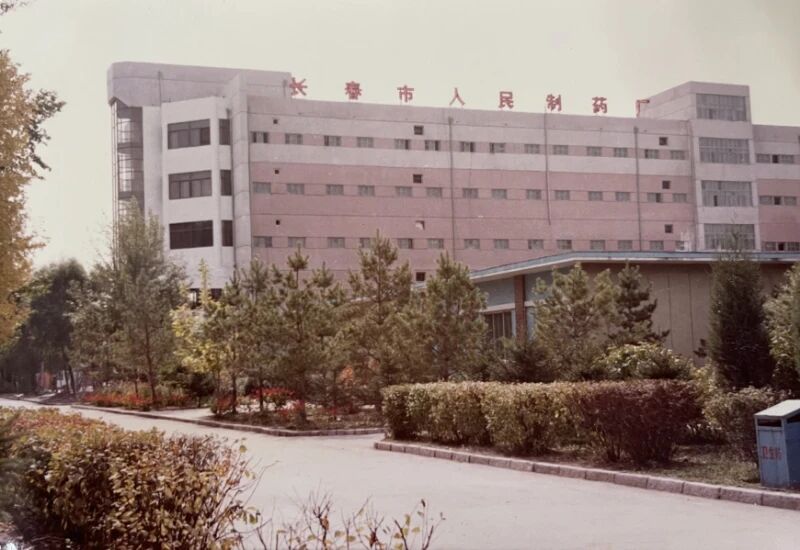
Fifty Years of Craftsmanship, Forging a Monument to Quality
From 1973 to now, over fifty years have passed. Production lines have been upgraded generation after generation, equipment has evolved from manual to automated, but the quality standards have never wavered.
The yellowed inspection records in the archives are the best proof. For decades, every batch of the Bone Hyperplasia Pill has had complete inspection data, batch after batch tested, item after item passing, consistently excellent.
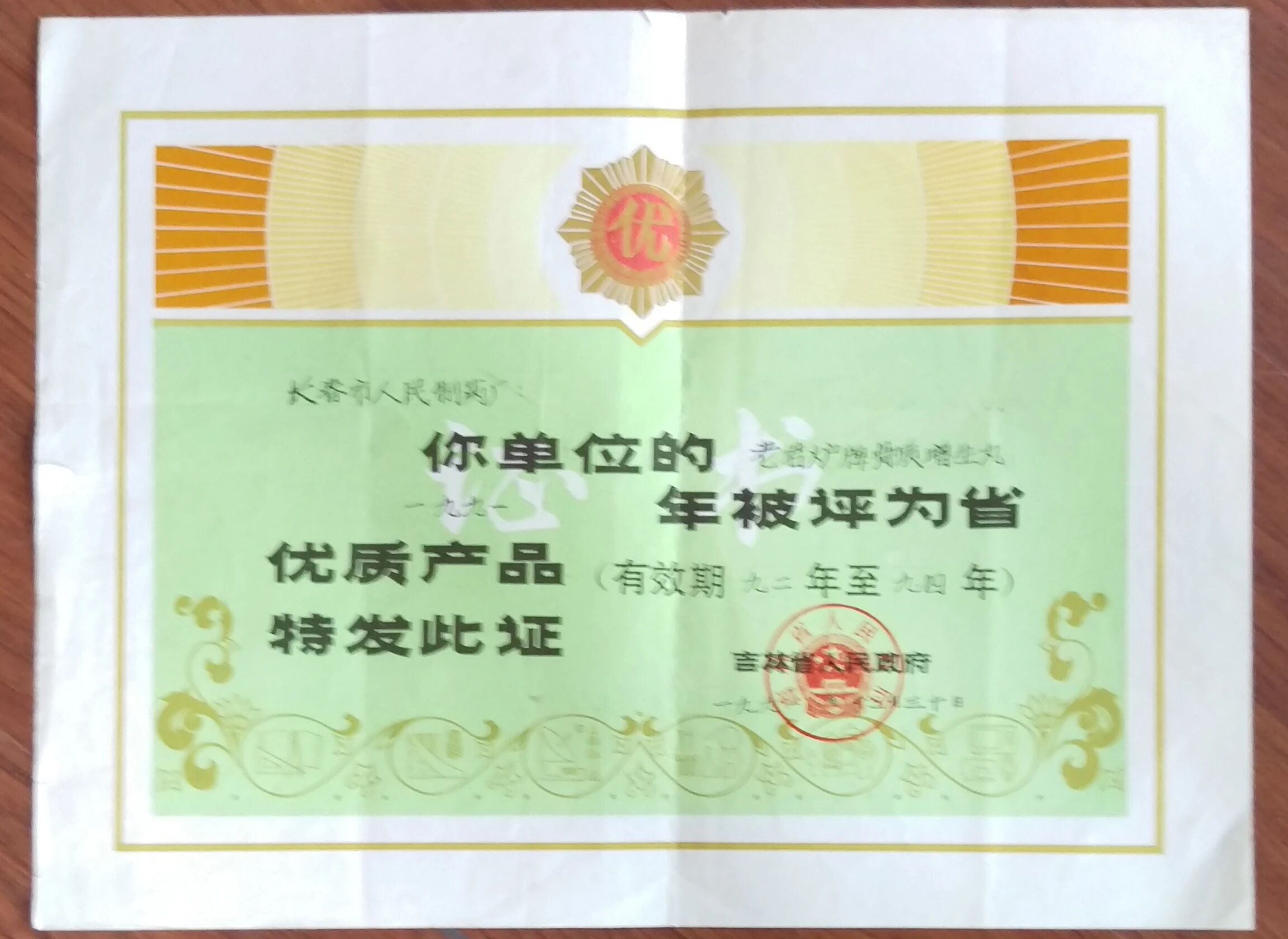
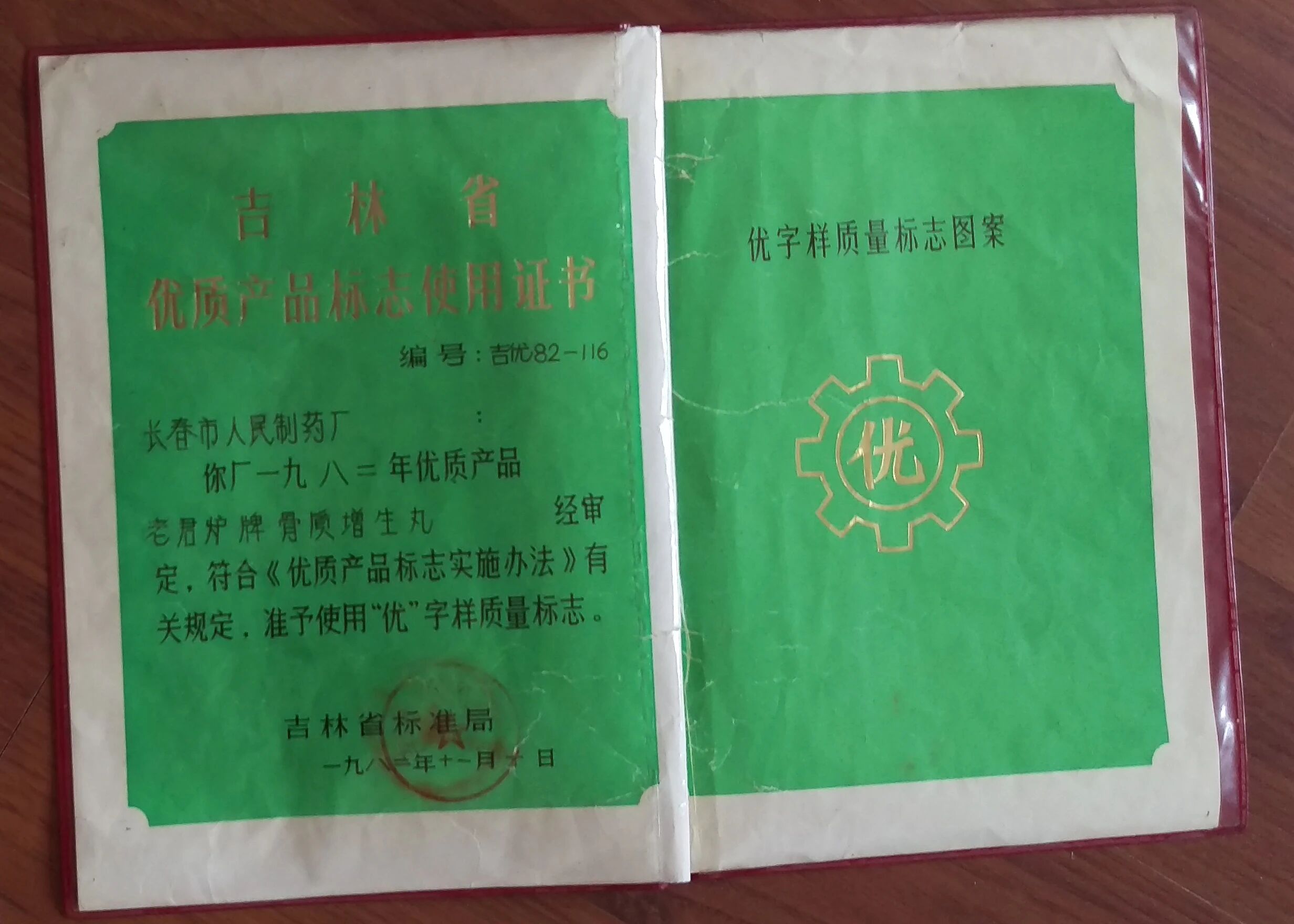
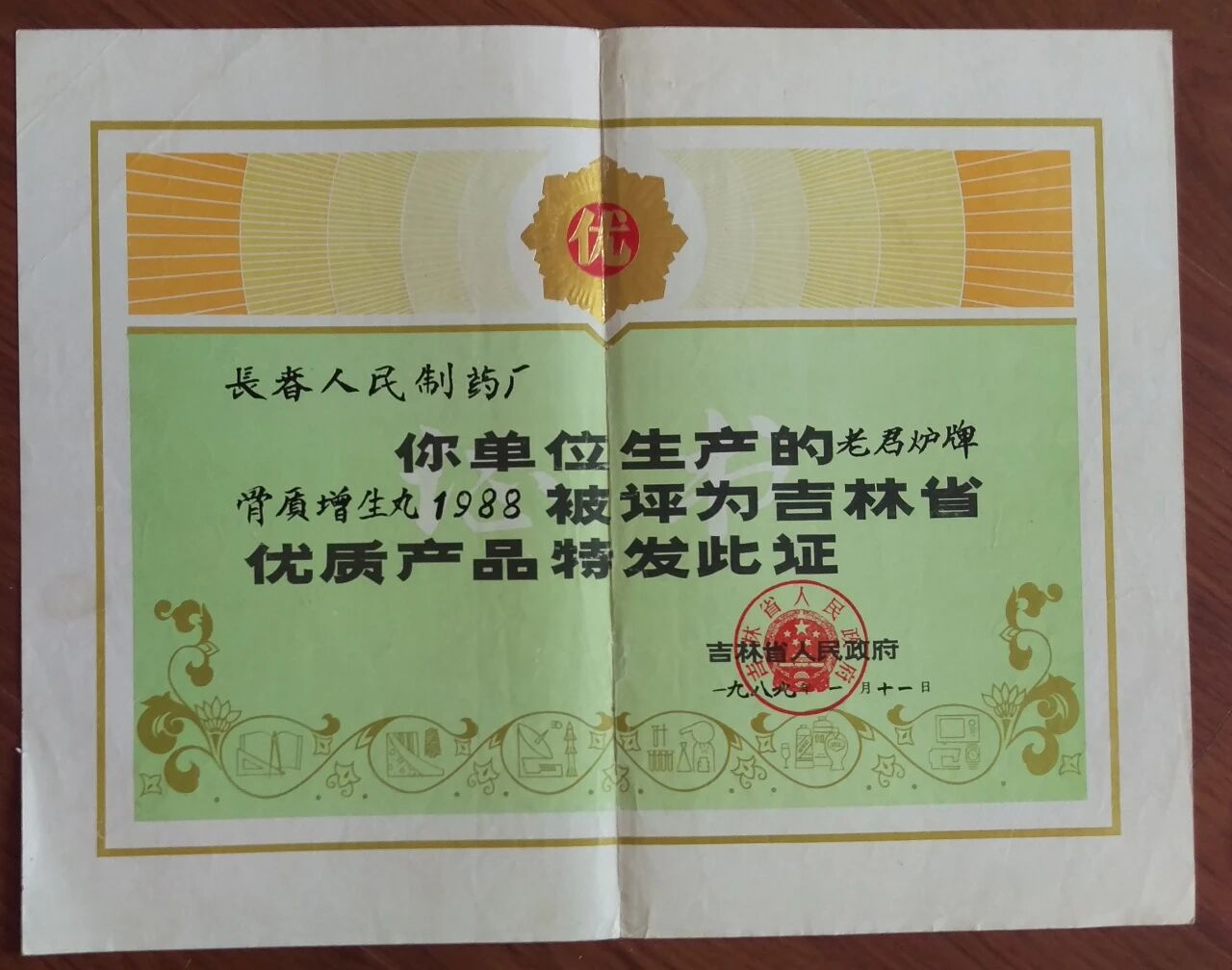
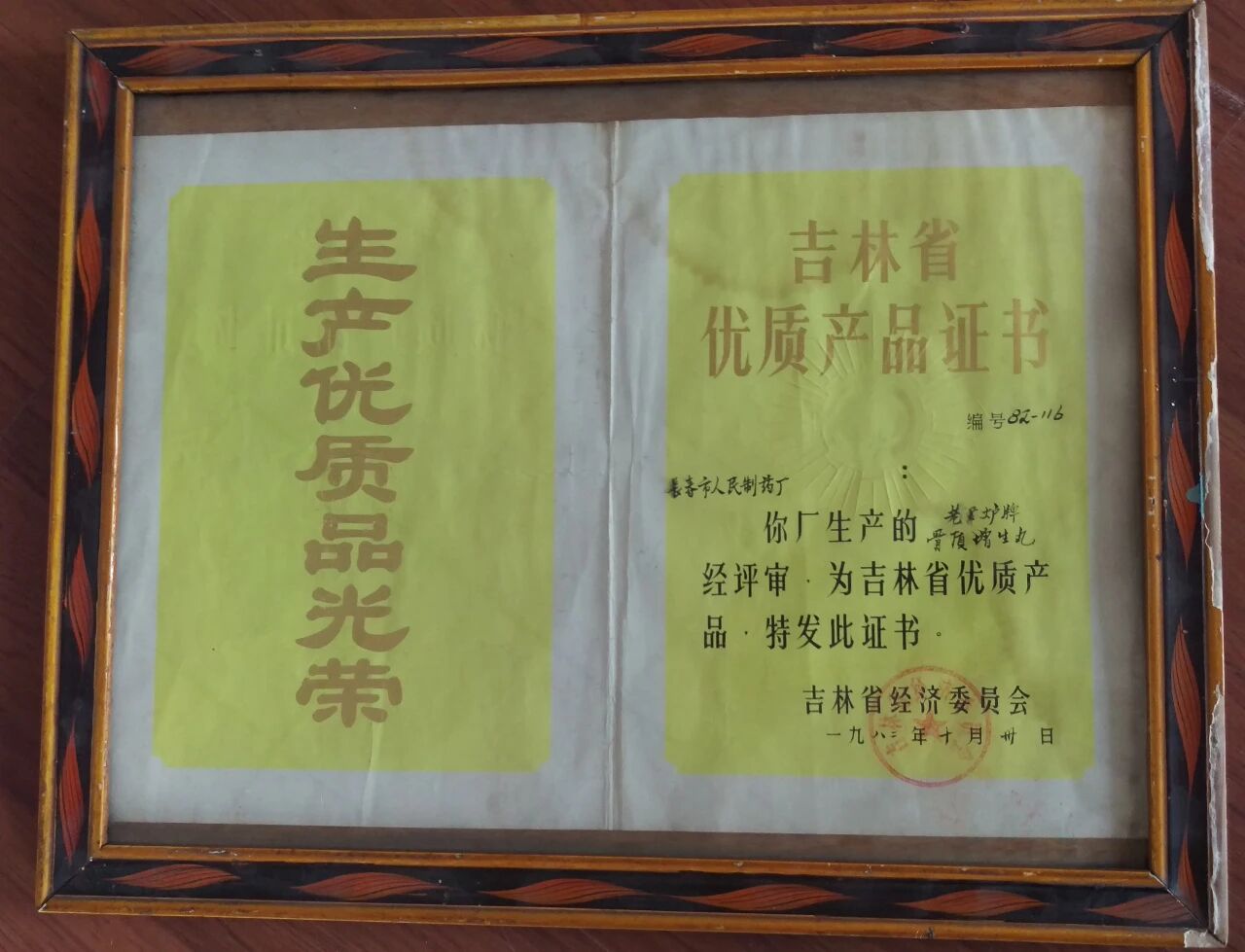
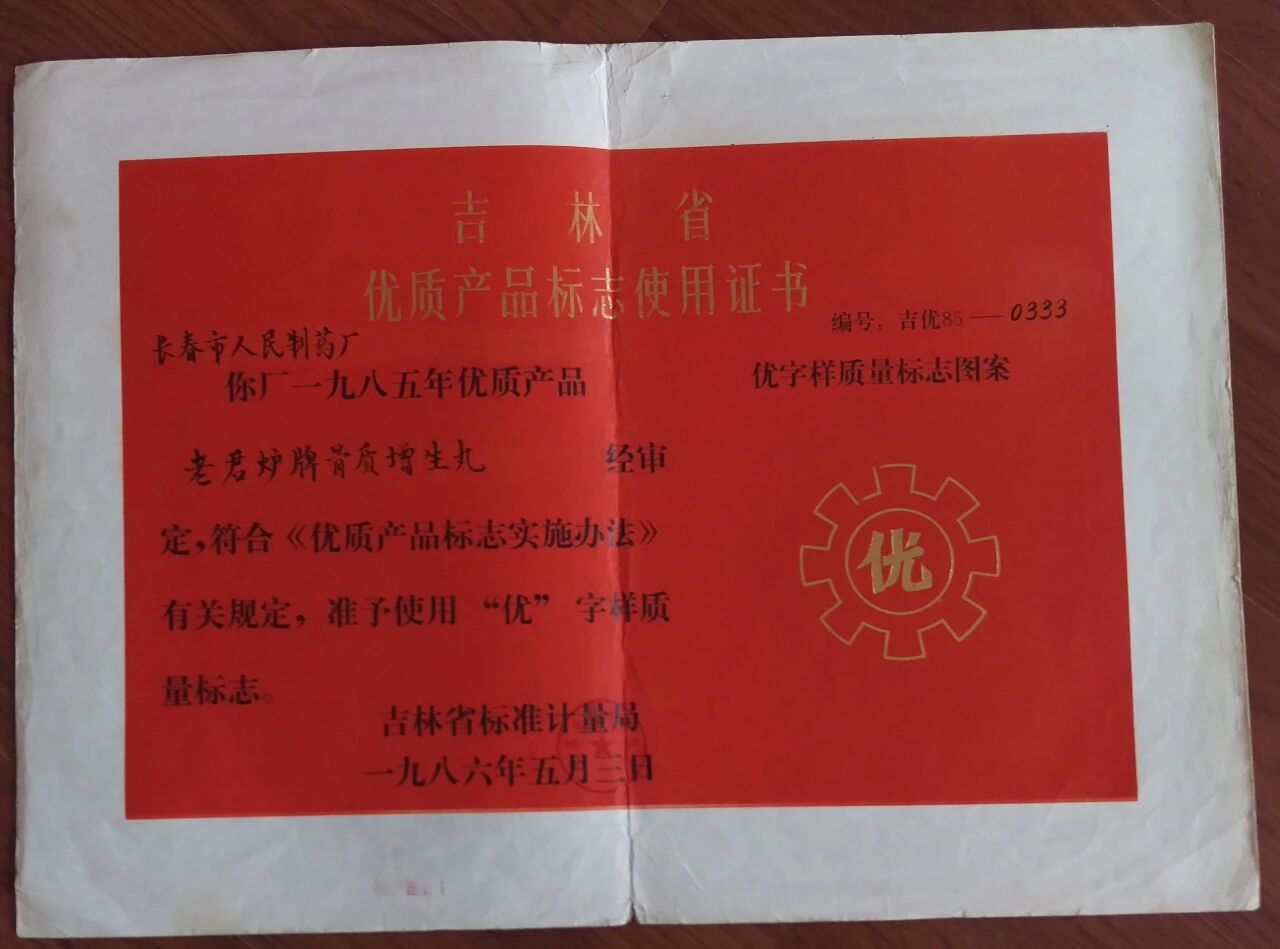
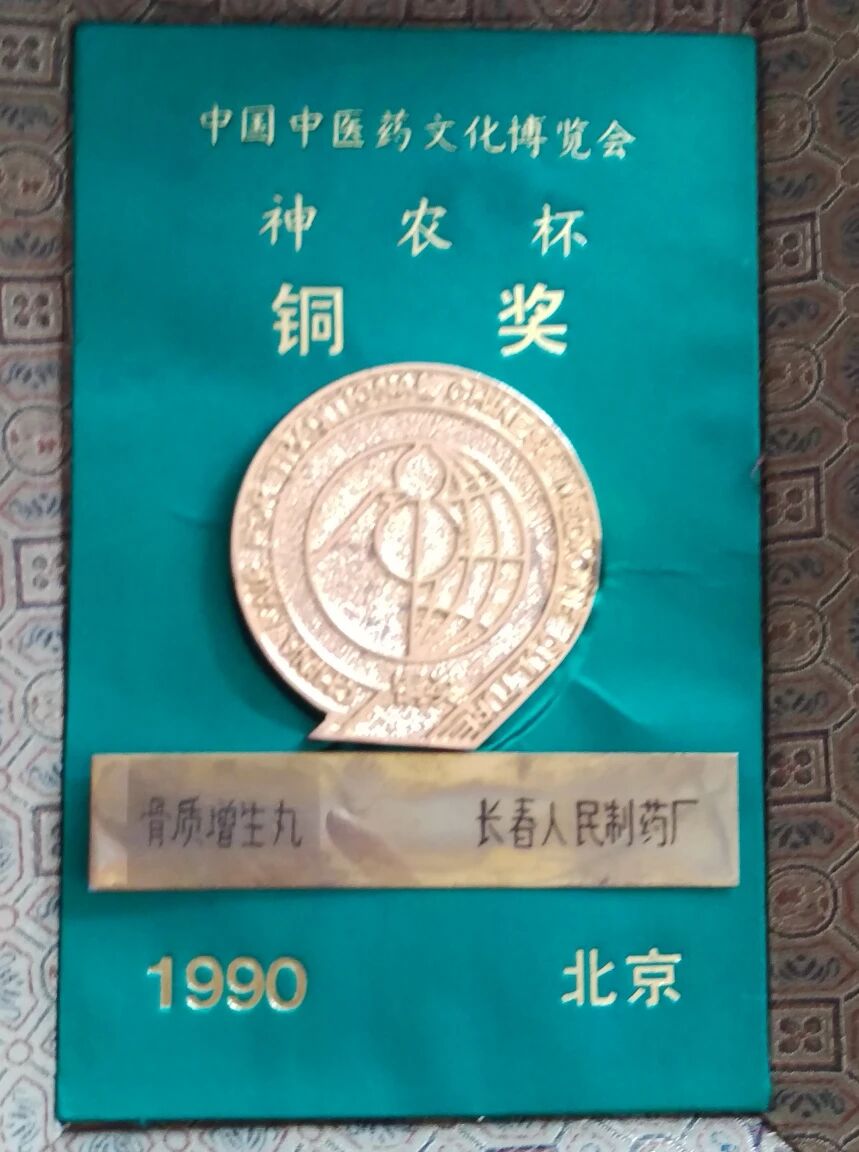
In 1982, the Bone Hyperplasia Pill won the "Jilin Province High-Quality Product Award" for the first time. In 1985, the second time. In 1988, the third time. In 1991, it won the "National Administration of Traditional Chinese Medicine High-Quality Product Award."
These honors are the result of word-of-mouth recommendations from patients, and the result of generations of pharmaceutical workers diligently working behind the scenes, meticulously monitoring the indicators. Since its launch, this medicine has benefited millions of patients with bone diseases.
From 1973 to now, over fifty years have passed. Production lines have been upgraded generation after generation, equipment has evolved from manual to automated, but the quality standards have never wavered.
The yellowed inspection records in the archives are the best proof. For decades, every batch of the Bone Hyperplasia Pill has had complete inspection data, batch after batch tested, item after item passing, consistently excellent.
In 1982, the Bone Hyperplasia Pill won the "Jilin Province High-Quality Product Award" for the first time. In 1985, the second time. In 1988, the third time. In 1991, it won the "National Administration of Traditional Chinese Medicine High-Quality Product Award."
These honors are the result of word-of-mouth recommendations from patients, and the result of generations of pharmaceutical workers diligently working behind the scenes, meticulously monitoring the indicators. Since its launch, this medicine has benefited millions of patients with bone diseases.
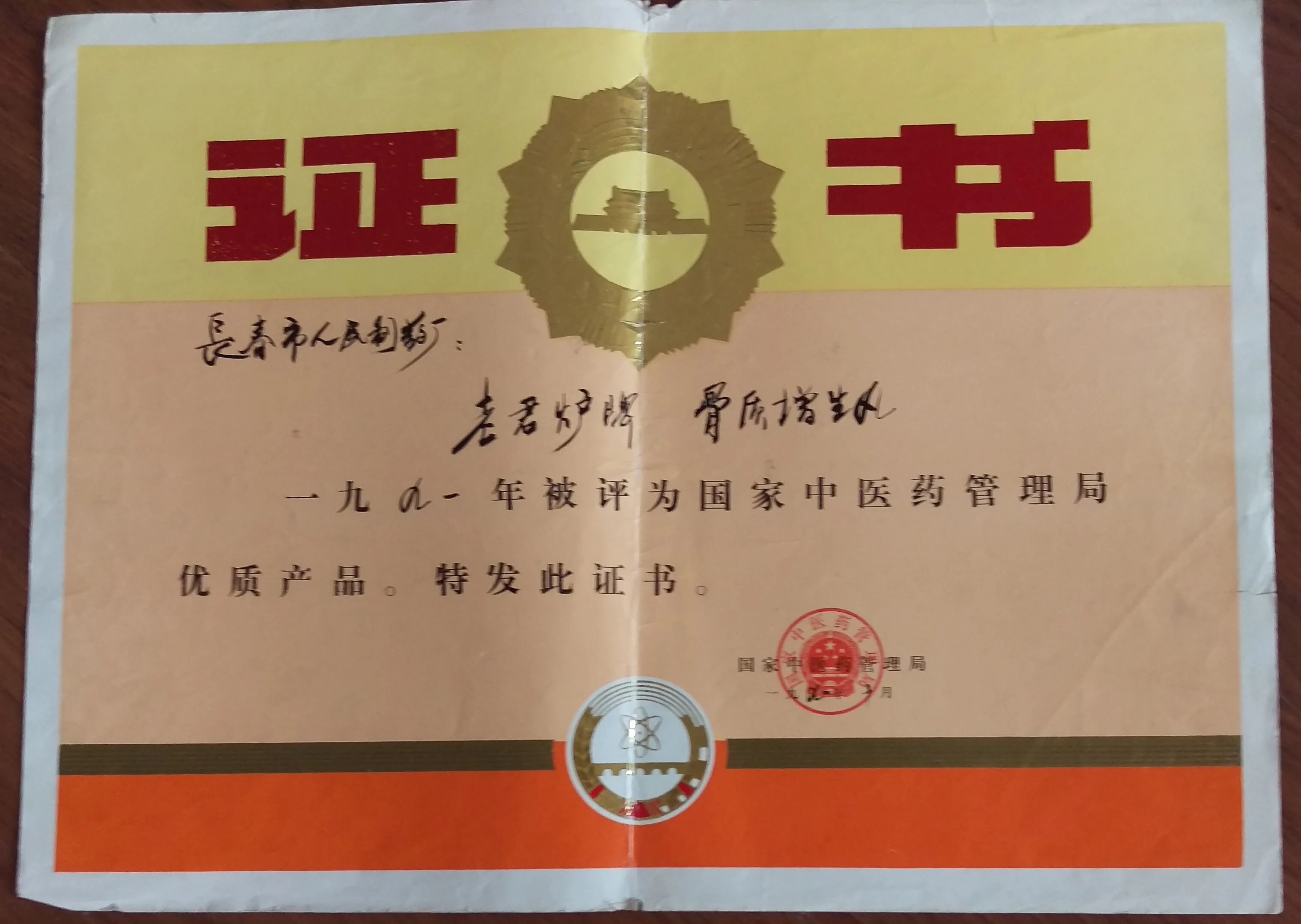
Renamed but Preserved, Yet the Formula Remains the Same
Around 2000, national drug standards were unified and standardized. Bone Hyperplasia Pills were included in the "Ministry-issued Standards for Traditional Chinese Medicine Compound Preparations, Volume 20," with standard number WS3-B-4044-98.
In 2001, according to the "Approval of the Jilin Provincial Drug Administration Regarding the Renewal of the Drug Approval Number for Bone Hyperplasia Pills" (Ji Yao Guan Zhu [2001] No. 13), the product name was officially changed to "Teng Huang Jian Gu Wan" (藤黄健骨丸).
The name changed, but the formula remained the same. Rehmannia glutinosa, Pyrola rotundifolia, Drynaria fortunei, Cistanche deserticola, Epimedium brevicornu, Spatholobus suberectus, and Radish seed—all seven herbs remained unchanged.
On August 16, 2002, Teng Huang Jian Gu Wan received a new drug approval number—National Drug Approval Number Z22021102.
In 2005, the water-honey pill format was expanded to better suit the needs of different patients. The dosage form was also expanded from large honey pills to concentrated honey pills.
In 2008, the Jilin Provincial Food and Drug Administration officially confirmed that Changchun Renmin Pharmaceutical Group Co., Ltd. was the original developer of Tenghuang Jian Gu Wan (藤黄健骨丸).
From the first mass production by Changchun Renmin Pharmaceutical Factory in 1973 to the official confirmation of its original research in 2008—for thirty-five years, the roots of this medicine have always been with Renmin Pharmaceutical.
Around 2000, national drug standards were unified and standardized. Bone Hyperplasia Pills were included in the "Ministry-issued Standards for Traditional Chinese Medicine Compound Preparations, Volume 20," with standard number WS3-B-4044-98.
In 2001, according to the "Approval of the Jilin Provincial Drug Administration Regarding the Renewal of the Drug Approval Number for Bone Hyperplasia Pills" (Ji Yao Guan Zhu [2001] No. 13), the product name was officially changed to "Teng Huang Jian Gu Wan" (藤黄健骨丸).
The name changed, but the formula remained the same. Rehmannia glutinosa, Pyrola rotundifolia, Drynaria fortunei, Cistanche deserticola, Epimedium brevicornu, Spatholobus suberectus, and Radish seed—all seven herbs remained unchanged.
On August 16, 2002, Teng Huang Jian Gu Wan received a new drug approval number—National Drug Approval Number Z22021102.
In 2005, the water-honey pill format was expanded to better suit the needs of different patients. The dosage form was also expanded from large honey pills to concentrated honey pills.
In 2008, the Jilin Provincial Food and Drug Administration officially confirmed that Changchun Renmin Pharmaceutical Group Co., Ltd. was the original developer of Tenghuang Jian Gu Wan (藤黄健骨丸).
From the first mass production by Changchun Renmin Pharmaceutical Factory in 1973 to the official confirmation of its original research in 2008—for thirty-five years, the roots of this medicine have always been with Renmin Pharmaceutical.
Utilizing Original Research Technology to Set National Standards for Chinese Medicine
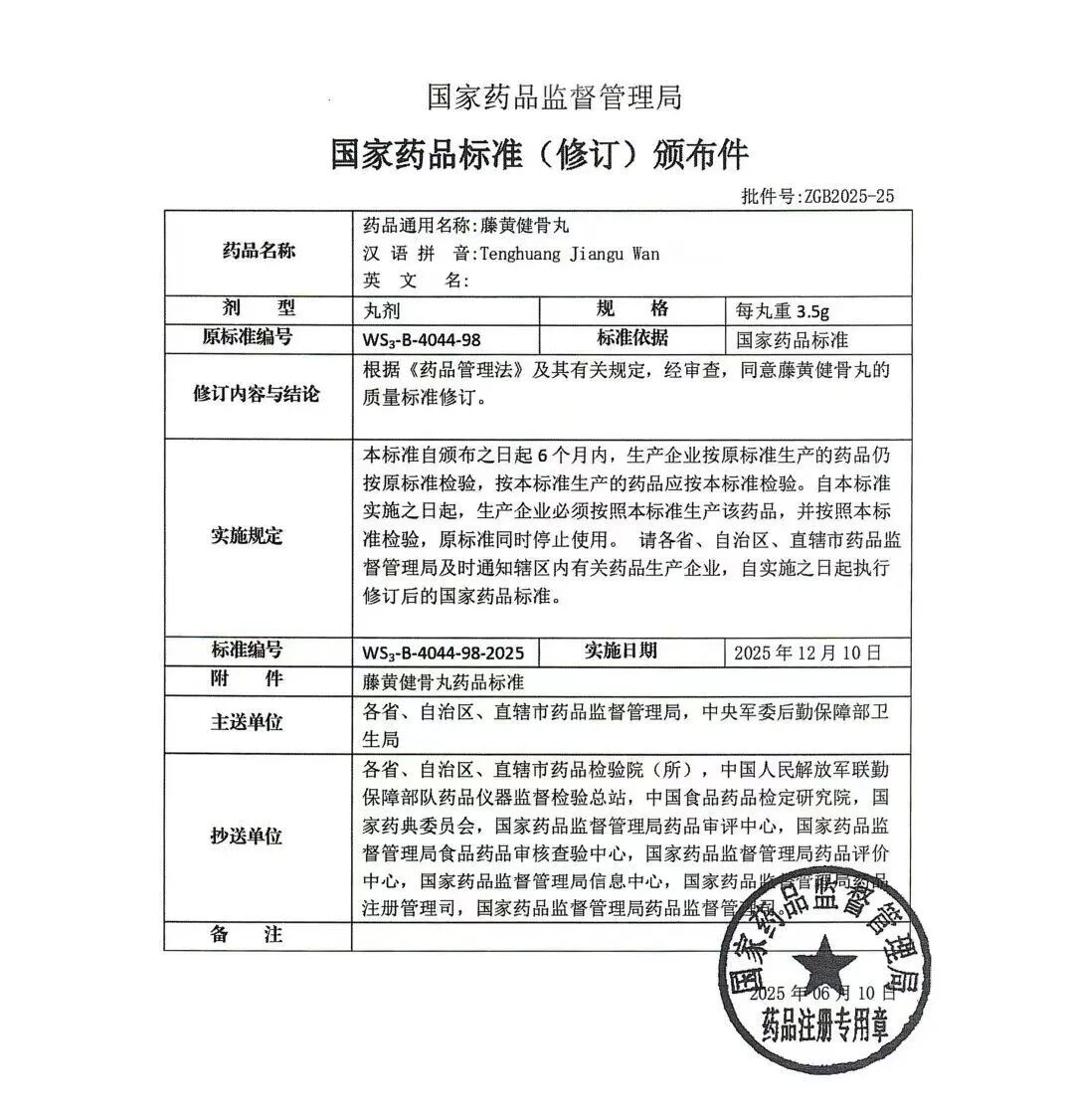
On June 10, 2025, the National Medical Products Administration (NMPA) approved the revision of the quality standard for Teng Huang Jian Gu Wan (藤黄健骨丸), initiated by Changchun Renmin Pharmaceutical Group Co., Ltd.
On June 12, 2025, the NMPA released "Delivery Information of Drug Standard Promulgation Documents," with the acceptance number for Teng Huang Jian Gu Wan being "中修20250030" (Middle Revision 20250030).
This step is more important than any award.
"Original research" means that Renmin Pharmaceutical was the first company to produce this drug. "Standard setter" means that Renmin Pharmaceutical is the company that defines "how this drug should be made."
From provincial drug standards to ministerial standards, and now to becoming a national drug standard setter in 2025—over several decades, Renmin Pharmaceutical has completed the leap from "implementing standards" to "setting standards."
On December 31, 2025, the National Medical Products Administration issued Announcement No. 127 of 2025, "Announcement on Revising the Instructions for Drugs of Gu Shen Sheng Fa Wan and Teng Huang Jian Gu Preparations," which uniformly revised the instructions for Teng Huang Jian Gu preparations (pills, tablets, capsules). As the initiator and drafter of this drug standard, Renmin Pharmaceutical Group professionally defined how this drug should be produced.
On June 10, 2025, the National Medical Products Administration (NMPA) approved the revision of the quality standard for Teng Huang Jian Gu Wan (藤黄健骨丸), initiated by Changchun Renmin Pharmaceutical Group Co., Ltd.
On June 12, 2025, the NMPA released "Delivery Information of Drug Standard Promulgation Documents," with the acceptance number for Teng Huang Jian Gu Wan being "中修20250030" (Middle Revision 20250030).
This step is more important than any award.
"Original research" means that Renmin Pharmaceutical was the first company to produce this drug. "Standard setter" means that Renmin Pharmaceutical is the company that defines "how this drug should be made."
From provincial drug standards to ministerial standards, and now to becoming a national drug standard setter in 2025—over several decades, Renmin Pharmaceutical has completed the leap from "implementing standards" to "setting standards."
On December 31, 2025, the National Medical Products Administration issued Announcement No. 127 of 2025, "Announcement on Revising the Instructions for Drugs of Gu Shen Sheng Fa Wan and Teng Huang Jian Gu Preparations," which uniformly revised the instructions for Teng Huang Jian Gu preparations (pills, tablets, capsules). As the initiator and drafter of this drug standard, Renmin Pharmaceutical Group professionally defined how this drug should be produced.
With meticulous craftsmanship, we fulfill our commitment; with national standards, we uphold our original aspirations.
Today, Teng Huang Jian Gu Wan (a traditional Chinese medicine formula) is still in production. The seven ingredients remain unchanged. The standard has become a national standard.
From the production of the first batch in 1973 to defining the standard for the entire industry in 2025—over half a century, a single pill has traversed the entire journey from "making it" to "defining how to make it."
It has witnessed Renmin Pharmaceutical's transformation from bungalows to factories, from manual labor to intelligent manufacturing, from learner to definer.
But all of this ultimately answers only one question: When millions entrust their health to you, how do you respond?
Renmin Pharmaceutical's answer is written in the inspection reports of every batch of products, in the revised national drug standard of 2025, and in the unwavering quality standards maintained for over half a century.
Good traditional Chinese medicine, made by the people. The weight of this statement was built by the hands of those who poured the ingredients in the 1960s, by the unwavering commitment to inspection of every batch in the 1980s, and by the confidence of those who define industry standards today.
Today, Teng Huang Jian Gu Wan (a traditional Chinese medicine formula) is still in production. The seven ingredients remain unchanged. The standard has become a national standard.
From the production of the first batch in 1973 to defining the standard for the entire industry in 2025—over half a century, a single pill has traversed the entire journey from "making it" to "defining how to make it."
It has witnessed Renmin Pharmaceutical's transformation from bungalows to factories, from manual labor to intelligent manufacturing, from learner to definer.
But all of this ultimately answers only one question: When millions entrust their health to you, how do you respond?
Renmin Pharmaceutical's answer is written in the inspection reports of every batch of products, in the revised national drug standard of 2025, and in the unwavering quality standards maintained for over half a century.
Good traditional Chinese medicine, made by the people. The weight of this statement was built by the hands of those who poured the ingredients in the 1960s, by the unwavering commitment to inspection of every batch in the 1980s, and by the confidence of those who define industry standards today.
Each generation has its own answer sheet. People's Pharmaceutical's answer sheet is still being written.