April 2026, Episode 2: The 60th Anniversary Brand Story of Changchun People's Pharmaceutical Group
What's it like to work in the same job from youth to old age? Miao Guoli said, "I dedicated my youth to the pharmaceutical factory." Su Lili said, "I couldn't bear to leave; I've been here for so many years, I've developed an attachment to it." Guo Shuxia said, "I've worked here from a young girl to an old woman." Liu Yanchun said, "From packaging worker to production scheduler, I haven't changed jobs for decades." Jiang Xiaohua said, "The people's prosperity is my glory." They weren't just saying a phrase; they were talking about the most precious years of their lives. In the winter of 1971, 19-year-old Miao Guoli walked through the gates of Changchun People's Pharmaceutical Factory. At that time, the factory was located at the southern end of Minfeng Street, surrounded by farmland. In winter, the north wind whipped up snowflakes that stung her face. She was assigned to the tablet workshop, where the most valuable assets were five single-punch tablet presses. For the next thirty years, she left her youth there.
In the same era, Jiang Xiaohua carried products from the People's Pharmaceutical Factory onto a long-distance green train; Su Lili learned to process medicinal materials in the pre-processing workshop; Liu Yanchun manually twisted wax paper to package pills in the pill workshop; and Guo Shuxia sealed bottle caps with fire in the liquid workshop. They had different positions and different experiences, but they shared a common name—People's People.
They also shared a common belief: to treat the factory as their home and to be proud of it.
They also shared a common belief: to treat the factory as their home and to be proud of it.
April 2026, Episode 2: The 60th Anniversary Brand Story of Changchun People's Pharmaceutical Group – Dedicating Youth to the Pharmaceutical Factory
When Miao Guoli joined the factory, it was still in its early stages. Without advanced equipment, they relied on their hands and sweat. She operated tablet presses in the tablet workshop, from single-punch presses to 33-punch presses; later, she worked in the pill workshop for over a decade. "Back then, there was no pay for overtime, but everyone was eager to do it," she recalled. She remembered a time when the factory caught fire, and the wooden trays in the drying room caught flames. Most of the factory workers were women, but not one of them hesitated. "Some colleagues had children in daycare, and they rushed in to put out the fire without even picking them up," Miao Guoli said. "That was state property; we couldn't just watch it burn down." After retiring, she often saw good news about the factory on her phone and would always share it on her WeChat Moments. "I dedicated my youth to the pharmaceutical factory," she said. "My feelings for the factory are very, very deep."
Su Lili joined the factory at 18, responsible for processing medicinal herbs in the pre-processing workshop. She couldn't buy ready-made medicinal materials; she had to do it herself—washing, cutting, drying, and processing—each step requiring strict quality control. In her mind, the quality of the herbs was always paramount—"Good herbs make good medicine."
Later, the factory introduced its first water pill molding machine. "The day the machine arrived, we were overjoyed. We didn't sleep a wink all night, just to get the job done." After retiring, she was rehired for over ten years. "I couldn't bear to leave; I've been here for so long, I've grown attached to it."
Later, the factory introduced its first water pill molding machine. "The day the machine arrived, we were overjoyed. We didn't sleep a wink all night, just to get the job done." After retiring, she was rehired for over ten years. "I couldn't bear to leave; I've been here for so long, I've grown attached to it."
Guo Shuxia joined the factory in 1986, manually sealing bottles in the liquid workshop. At that time, they produced ginseng royal jelly and Naoxinshu oral liquid, 200 bottles per drawer, and the daily production increased from 15 drawers to 24 drawers. "It was all done by hand, sealing the bottles with fire, relying entirely on hand speed." Later, semi-automatic filling machines came, which improved efficiency, but the quality requirements were never lowered.
April 2026, Episode 2: Changchun People's Pharmaceutical Group's 60th Anniversary Brand Story - Taking the Factory as Home and Taking Pride in the Factory
Jiang Xiaohua is a sales representative responsible for the Liaoning region. She only returns to Changchun once every month or even every two months, traveling between various cities by slow train. "It was my first time going out, and I was unfamiliar with the place, so there were definitely difficulties." But the difficulties were quickly overwhelmed by orders—Renmin Pharmaceutical's medicines sold exceptionally well nationwide. Annao Niuhuang tablets won the National Silver Medal, and Tenghuang Jian Gu Wan and Xingnao Zaizao Wan were in high demand. "We didn't need to go to pharmacies to promote our products; we directly connected with pharmaceutical companies in various provinces, and they proactively wanted to buy from us," she recalled. "Because of their good efficacy and consumer recognition, they sold quickly on the shelves. In those days, workers considered the factory their home and were proud of it. I felt particularly honored when the factory prospered." When the factory was being built, the workers didn't go home after get off work; they mixed mud and made bricks without complaint. "When I was needed for work, I ate and slept at the factory and never left."
Liu Yanchun joined the factory in 1978, starting as a pill packaging worker before transferring to production management. She said, "Originally, we produced according to plan; later, we produced on demand, only producing when we received orders." This shift made management much more refined—cost accounting, material control, and expiration date management were all standardized step by step. "Before, with such a large operation, we wasted a lot. Later, every bottle and every bag had to be strictly distributed; there couldn't be any waste." In those years, some chose to leave, but she chose to stay. "I have an emotional attachment to the pharmaceutical factory; I couldn't bear to leave." Now retired, she still has endless things to say about the factory.
April 2026, Episode 2: The 60th Anniversary Brand Story of Changchun People's Pharmaceutical Group. Times are changing, but our original aspirations remain unchanged.
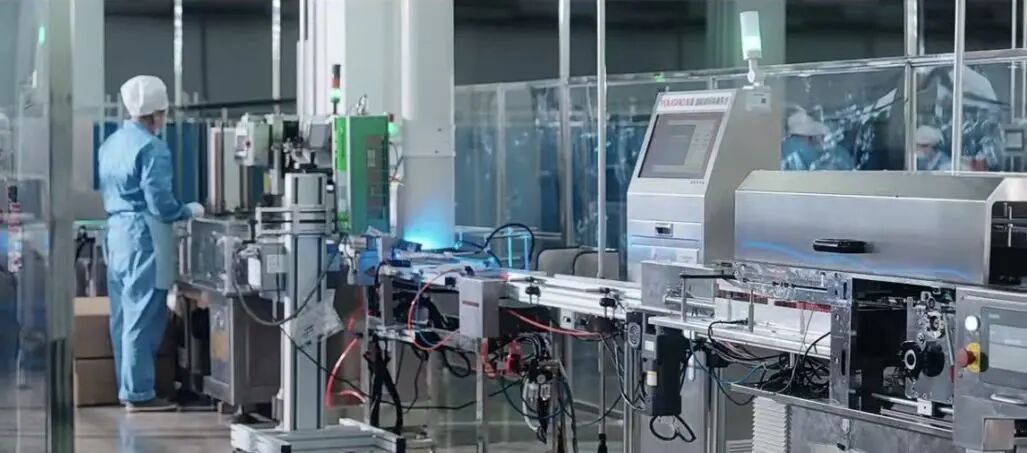
The five veteran employees, who joined the factory between 1971 and 1986, held positions covering production, sales, and management, and witnessed the transformation of Renmin Pharmaceutical from manual to automated operations.
In the memories of several veteran employees, Tenghuang Jian Gu Wan (a traditional Chinese medicine) was in high demand and short supply, while Annao Niuhuang Pian (another traditional Chinese medicine) won the National Silver Medal. The products sold well throughout the country, thanks to their unwavering commitment to quality. Times change, but the people's pursuit of quality has never wavered. Generation after generation has taken root here, treating the pharmaceutical factory as their home and dedicating their youth to their work.
April 2026, Episode 2: The 60th Anniversary Brand Story of Changchun People's Pharmaceutical Group – A Tribute to That Generation, A Tribute to This Passion
Over the past sixty years, Renmin Pharmaceutical has grown from a row of bungalows at the southern end of Minfeng Street into a modern pharmaceutical enterprise. Those who dedicated their youth to Renmin have either retired or continue to contribute. What they left behind is not just the technology on the production line and the reputation in the sales network, but a spirit—treating the factory as their home, disregarding personal gain; taking pride in the factory, giving their all. This spirit is Renmin Pharmaceutical's most valuable asset over the past sixty years. It is invisible and intangible, yet it is etched into the bones of a generation and integrated into the quality of every single pill.
At the end of the interview, several veteran employees were asked: What would you like to say to today's young people? Miao Guoli said, "I hope they cherish the current state of Renmin Pharmaceutical and dedicate their lives to contributing to the company." Su Lili said, "In pharmaceuticals, safety is paramount, followed by quality. If people are good, the medicine will be good." Liu Yanchun said, "Cherish the present, love your job, and do your work well." Jiang Xiaohua said, "Treat the factory as your own home, work hard, and you'll be right." Guo Shuxia said, "I hope the young people have the drive to strive and make the company even better."
These words are the answer written by the older generation of Renmin employees over decades. Today, the baton has been passed to the new generation.
Taking the factory as home, taking pride in the factory—this is the shared memory of Renmin employees, and the root that has been passed down through generations of Renmin Pharmaceutical.
At the end of the interview, several veteran employees were asked: What would you like to say to today's young people? Miao Guoli said, "I hope they cherish the current state of Renmin Pharmaceutical and dedicate their lives to contributing to the company." Su Lili said, "In pharmaceuticals, safety is paramount, followed by quality. If people are good, the medicine will be good." Liu Yanchun said, "Cherish the present, love your job, and do your work well." Jiang Xiaohua said, "Treat the factory as your own home, work hard, and you'll be right." Guo Shuxia said, "I hope the young people have the drive to strive and make the company even better."
These words are the answer written by the older generation of Renmin employees over decades. Today, the baton has been passed to the new generation.
Taking the factory as home, taking pride in the factory—this is the shared memory of Renmin employees, and the root that has been passed down through generations of Renmin Pharmaceutical.